
هل أنتم مستعدون لتحسين ابتسامات مرضاكم وتعزيز ثقتهم بأنفسهم؟
تبييض الأسنان ليس مجرد موضة تجميلية، بل هو علاج أساسي يُساهم في تحسين جودة حياة مرضاكم. سواءً كانت المشكلة بقعاً عنيدة أو بهتاناً ناتجاً عن التقدم في السن، لديكم الحلول لاستعادة بريق أسنانهم الشبابي. في هذه المدونة، سنستعرض تقنيات تبييض الأسنان المختلفة، بما في ذلك طرق التبييض داخل وخارج التاج. فلنستعد لبعض الإجراءات الحديثة لضمان خروج جميع المرضى من العيادة بابتسامة عريضة! ففي النهاية، ابتسامة مشرقة تعني مرضى أكثر سعادة، ومن منا لا يرغب بذلك؟
ما هو تبييض الأسنان؟
تتضمن عملية تبييض الأسنان أو تفتيح لونها تفتيح لون السن باستخدام عوامل كيميائية لأكسدة الصبغة العضوية الموجودة في السن.
متى يحتاج المريض إلى تبييض الأسنان؟
على الرغم من إمكانية إزالة العديد من بقع الأسنان، مثل بقع التبغ والشاي والقهوة، والبقع الخضراء المرتبطة بغشاء ناسمييث لدى الأطفال، من خلال جلسات التنظيف والتلميع الدورية أثناء الوقاية، إلا أن هناك حالات يصعب فيها إزالة البقع لأسباب مشابهة أو مختلفة. فما هي الحالات التي تستدعي تبييض الأسنان؟ دعونا نستكشف ذلك.
- عندما يكون التصبغ الناتج عن المشروبات مثل الشاي أو القهوة أو النبيذ الأحمر أو التبغ الممضوغ من الدرجة العالية ولا يظهر أي تفتيح بعد التنظيف الوقائي للفم.
- التصبغ الناتج عن نترات الفضة
- البقع الناتجة عن أدوية مثل التتراسيكلين، ومضادات الهيستامين، ومضادات الذهان، والعلاج الكيميائي، وما إلى ذلك.
- التسمم بالفلور
- البقع الناتجة عن حالات مرضية جهازية مثل اليرقان والبورفيريا
- تغير لون الأسنان بعد إصابة الأسنان وتحلل لب السن.
- تغير اللون الناتج عن حشوات الأملغم الفضية، وأدوية علاج قناة الجذر على سبيل المثال الزيوت الأساسية من المواد الراتنجية.
- يؤدي التقدم في السن إلى الترسيب الفسيولوجي للعاج الثانوي مما يؤدي إلى ظهور الأسنان بمظهر أكثر عتامة.
ما هي الطرق المختلفة لتبييض الأسنان؟
أ) تبييض الأسنان داخل التاج (تبييض الأسنان المعالجة لبياً / تبييض الأسنان غير الحيوية)
- تقنية التبييض المتحرك
- مبيض حراري تحفيزي للاستخدام في العيادة
ب) تبييض الأسنان خارج التاج (تبييض الأسنان الحيوي)
- مبيض حيوي في العيادة
- مبيض منزلي الصنع
تبييض الأسنان داخل التاج (تبييض الأسنان المعالجة لبياً/تبييض الأسنان غير الحيوية) :
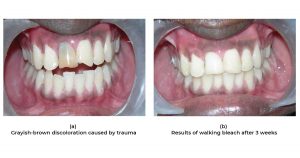
تقنية التبييض التدريجي: في هذه التقنية، يُجرى تبييض الأسنان المعالجة لبياً عندما يكون التصبغ الداخلي للعاج ناتجاً عن بقايا مواد الحشو في حجرة اللب، بالإضافة إلى الرواسب في قرون اللب. يُزال جزء من الترميم التاجي، ثم يُزال جزء من مادة غوتا بيركا الموجودة أسفل حافة عنق السن مباشرةً. بعد ذلك، يُوضع معجون من بيربورات الصوديوم والماء. يُوضع حشو مؤقت، ويُستدعى المريض لمواعيد لاحقة للتأكد من وصول السن إلى درجة اللون المطلوبة. عند تحقيق النتائج المرجوة، يُوضع الترميم الدائم، ويُوضع مركب مُعالج بالحمض لسد الفتحة اللسانية. تُجرى هذه التقنية في الأسنان التي تعاني من تغير لون حجرة اللب والعاج، وفي حالات التصبغ التي لا تستجيب للتبييض الخارجي. 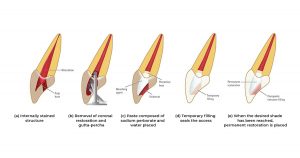
 تقنية التبييض الحراري التحفيزي في العيادة: في هذه الطريقة، يُحضّر السن المعالج لبياً كما في التبييض التقليدي، ثم توضع قطعة قطن فضفاضة على السطح الشفوي وحجرة اللب للسن المراد تبييضه. تُشبع هذه القطع القطنية بمحلول بيروكسيد الهيدروجين بتركيز 30%، والذي يُفعّل بتعريضه للضوء والحرارة من مصدر ضوئي قوي. يُعرّض السن لعدة دورات، عادةً من 5 إلى 6 دقائق، ويُجدد محلول التبييض على فترات متقاربة. عند اكتمال عملية التبييض، تُغلق قطعة قطن مبللة ببيروكسيد الهيدروجين أو بيروكسيد الهيدروجين مع بيربورات الصوديوم في حجرة اللب حتى موعد الجلسة التالية. يمكن استخدام هذه الطريقة أيضاً مع تقنية التبييض التقليدي.
تبييض الأسنان خارج التاج (تبييض الأسنان الحيوي):
تقنية التبييض الحيوي في العيادة: تستخدم هذه التقنية عادةً محلول بيروكسيد الهيدروجين بتركيز 35%، يُوضع مباشرةً على الأسنان. يتوفر عامل التبييض تجاريًا على شكل جل يمنع سيلان المادة أثناء التطبيق. قد تتضمن هذه العملية استخدام الحرارة و/أو الضوء لتنشيط عامل التبييض، ولذلك يُسمى التبييض الحراري التحفيزي. مع هذه التقنية، لا يُعد التزام المريض عاملاً أساسيًا،
إذ يُمكن الحصول على نتائج فعّالة خلال جلستين إلى ثلاث جلسات. تُجرى هذه التقنية عادةً للأسنان التي تعاني من التفلور الخفيف، أو بقع التتراسيكلين، أو في حالات التصبغات الشديدة. يُمكن أيضًا إجراء التبييض لتفتيح لون الأسنان قبل ترميمها باستخدام الراتنج المُلصق أو قشور البورسلين أو التيجان .
كما يُمكن استخدامه لمطابقة لون تاج موجود أفتح من لون الأسنان الطبيعية.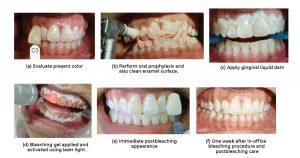
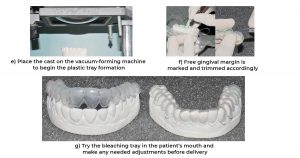
تقنية التبييض المنزلي: يُعد التبييض المنزلي التقنية الأكثر شيوعًا نظرًا لسهولة استخدامه وانخفاض تكلفته عادةً على المريض. تستخدم هذه الطريقة صينية مصممة خصيصًا تحتوي على 10% من بيروكسيد الكارباميد. يتميز بيروكسيد الكارباميد بثباته العالي مقارنةً ببيروكسيد الهيدروجين، ويمكن أن يبقى فعالًا لعدة ساعات. مع ذلك، تتطلب هذه التقنية توثيقًا دقيقًا وتنفيذًا متقنًا للخطوات التالية:
- التاريخ الطبي والأسنان
- الفحص السريري
- صور الأشعة السينية للأسنان التي يتم علاجها
- أخذ طبعة لأقواس الأسنان لصنع قوالب تبييض الأسنان
- زيارات متابعة لرصد التقدم المحرز وضمان الامتثال
يُوصى به للمرضى الذين يعانون من تغيرات سطحية في لون المينا، وتغيرات صفراء خفيفة، وتغيرات بنية اللون بسبب التسمم بالفلور، وتغيرات اللون المرتبطة بالعمر.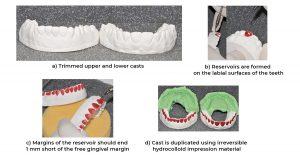
خمسة أسباب يمكنك إخبار مرضاك بها لتوضيح لماذا ينبغي عليهم الخضوع لتبييض الأسنان الاحترافي:
- التقييم : يضمن التقييم المهني العلاج المناسب لحالة الأسنان الخاصة بهم.
- تقنيات متقدمة: يستخدم أطباء الأسنان أساليب تبييض فائقة تقدم نتائج أفضل من مجموعات التبييض المنزلية الرائجة، والعلكة، ومعجون الأسنان، وأقلام تبييض الأسنان.
- تجنب الضرر: تقلل العناية الاحترافية من خطر تلف المينا والحساسية التي غالباً ما ترتبط بالطرق والمنتجات التي يتم استخدامها ذاتياً.
- الضمان: يتلقى المرضى إرشادات الخبراء طوال العملية، مما يضمن سلامتهم ورضاهم.
- الرعاية اللاحقة: يقدم أطباء الأسنان نصائح مخصصة للرعاية اللاحقة للحفاظ على نتائجهم لفترة أطول.
خاتمة:
بصفتنا أطباء أسنان، لدينا فرصة أكبر لتحسين جودة حياة مرضانا من خلال توفير خيارات متعددة لتبييض الأسنان. من المفيد تشجيع مرضانا على اختيار التبييض الاحترافي، لأن ذلك يُمكّننا من تقديم رعاية أفضل ويقلل من مخاطر استخدام البدائل المتاحة دون وصفة طبية. تذكروا أن الابتسامة المشرقة تُحدث فرقًا كبيرًا في حياة مرضانا، إذ تُعزز ثقتهم بأنفسهم ورفاهيتهم بشكل عام. لنكن على اطلاع دائم بأحدث التطورات في تقنيات تبييض الأسنان وأفضل الممارسات، لنستمر في تقديم نتائج استثنائية. معًا، نستطيع مساعدة مرضانا على تحقيق الابتسامة المشرقة التي يتمنونها، وبناء علاقات طويلة الأمد قائمة على الثقة والتميز في الرعاية. كما ندعوكم لاستكشاف منتجات التبييض الحصرية المتوفرة على كونكت دنت ، لتزويد مرضاكم بحلول تبييض احترافية عالية الجودة في متناول أيديهم. المرجع: كتاب Grossman's Endodontic Practice، الطبعة الثالثة عشرة .
Teeth Whitening : Types, Procedure and Technique
Are you prepared to improve the smiles of your patients and increase their self-confidence? Teeth whitening is not just a cosmetic fad, but rather an essential treatment that can help improve the quality of your patients’ lives. Whether it is the stubborn stains or the dullness related to aging, you have the solutions to restore their youthful gleam. In this blog, we’ll explore the various techniques of teeth whitening, including intra-coronal and extra-coronal bleaching methods. Let us get ready for some updated procedures to make sure all the patients walk out of the chairs with the widest smiles on their faces! After all, a brighter smile means happier patients—and who doesn’t want that?
What is teeth whitening?
Teeth whitening or bleaching involves the lightening of color of the tooth by the use of chemical agents to oxidize the organic pigmentation in the tooth.
When does a patient require Teeth whitening?
While several tooth discolorations such as tobacco stains, tea, and coffee stains, green discolorations associated with Nasmyths’s membrane in children, etc., can be removed by regular appointments of scaling and polishing during tooth prophylaxis still, there are times when the stains due to similar or different reasons that cannot be removed easily. So, what are the situations where bleaching is necessary? Let’s explore.
- When the staining from beverages like tea, coffee, red wine, or chewing tobacco, is of higher grade and shows no lightening post oral prophylaxis.
- Staining from silver nitrate
- Stains caused by medications like tetracycline, antihistamines, antipsychotics, chemotherapy, etc.
- Fluorosis
- Stains caused due to systemic conditions like Jaundice and Porphyria
- Tooth discoloration following dental trauma and decomposition of pulp.
- Discoloration caused by silver amalgam fillings, root canal medicaments for example essential oils from resinous substances.
- Aging, which causes the physiological deposition of secondary dentin leading to a more opaque appearance of teeth.
What are the different methods of bleaching?
A) Intracoronal bleaching (bleaching of endodontically treated tooth/nonvital bleaching)
- Walking bleach technique
- In-office thermocatalytic bleach
B) Extracoronal bleaching ( Vital Tooth Bleaching)
- In–office vital bleach
- At–home bleach
Intracoronal bleaching (bleaching of endodontically treated tooth/nonvital bleaching):
WALKING BLEACH TECHNIQUEIn this, the bleaching of an endodontically treated tooth is done when the internal staining of the dentin is caused by the remnants of obturating materials in the pulp chamber, as well as debris in the pulp horns. Part of the coronal restoration is removed followed by the removal of part of gutta-percha present just below the cervical margin. A paste of sodium perborate and water is then applied. Temporary filling is done and the patient is recalled for appointments to check whether the tooth has reached the desired shade stage. When the desired results are met, the permanent restoration is placed, and an acid-etched composite is placed to restore the lingual access. It is done in the tooth with discoloration of the pulp chamber, dentin, and discolorations which are not amenable to extracoronal bleaching. IN–OFFICE THERMOCATALYTIC BLEACH TECHNIQUEIn this method also, an endodontically treated tooth is prepared as was done for the walking bleach but is then followed by placing a loose mat of cotton on the labial and the pulp chamber of the tooth to be bleached. These loose mats are saturated with 30% Hydrogen peroxide which is activated by exposing it to light and heat from a powerful light source. The tooth is subjected to several, usually 5-6 minute exposures and the bleaching solution is replenished at frequent intervals. On completion of the bleaching process, a pellet of cotton moistened in hydrogen peroxide or hydrogen peroxide and sodium perborate is sealed in the pulp chamber until the following appointment.This can also be used in combination with the walking bleach technique.
Extracoronal bleaching (Vital Tooth Bleaching):
IN–OFFICE VITAL BLEACH TECHNIQUE-This technique generally uses a 35% hydrogen peroxide solution that is directly placed on the teeth. The bleaching agent is commercially available in the form of the gel which prevents running of the material on the application. This may involve the application of heat and/or light to activate the bleaching agent, hence called thermocatalytic bleaching. With this technique, patient compliance is not a major factor since effective results can be obtained in two to three visits. Usually done in teeth with mild fluorosis, and tetracycline stains or in severe discolorations. Bleaching could also be performed to lighten the tooth color before restoration with bonded resin or porcelain veneers or crowns. It can also be used to match the color of an existing crown that is lighter than the natural teeth.:
AT – HOME BLEACHING TECHNIQUE:At–home bleaching is the more commonly used technique because it is easy to perform and usually less expensive for the patient. It uses a custom-fit tray with 10% carbamide peroxide. Carbamide peroxide is more stable than hydrogen peroxide and can be active for up to several hours. However, this technique requires methodical documentation and execution of the following things:
- Dental and medical history
- Clinical examination
- Radiographs of the teeth being treated
- Impression of the dental arches to make bleaching trays
- Follow-up visits to monitor progress and ensure compliance
It is indicated in patients with superficial enamel discolorations, mild yellow discolorations, brown fluorosis discolorations, and age-related discolorations.
Five A’s that you can tell your patients as to why they should get their Professional Teeth Whitening done:
- Assessment: A professional evaluation ensures the right treatment for their specific dental condition.
- Advanced techniques: Dentists utilize superior whitening methods that offer better results than the trendy at-home kits, gums, toothpaste, and teeth whitening markers.
- Avoid damage: Professional care minimizes the risk of enamel damage and sensitivity often associated with DIY methods and products.
- Assurance: Patients receive expert guidance throughout the process, ensuring safety and satisfaction.
- Aftercare: Dentists provide tailored aftercare advice to maintain their results longer.
Conclusion:
Being dentists presents a greater chance for us to improve our patient’s quality of life by offering a plethora of teeth whitening options. It is beneficial to motivate our patients to opt for professional whitening because this enables us to provide better care and reduces the chances of exposure from using over-the-counter alternatives. Remember, a bright smile can be a transformative experience for our patients, boosting their confidence and overall well-being. Let’s stay informed about the latest advancements in teeth whitening techniques and best practices, so we can continue to deliver exceptional outcomes. Together, we can help our patients achieve the radiant smiles they desire, fostering long-lasting relationships built on trust and excellence in care. Also, be sure to explore the exclusive bleaching products available on DentalKart, to provide your patients with top-notch, professional-grade whitening solutions conveniently at hand.Reference: Grossman’s Endodontic Practice 13th Edition.